Revenue Is a Byproduct of Deterrence, Not Evidence of a “Money Grab”
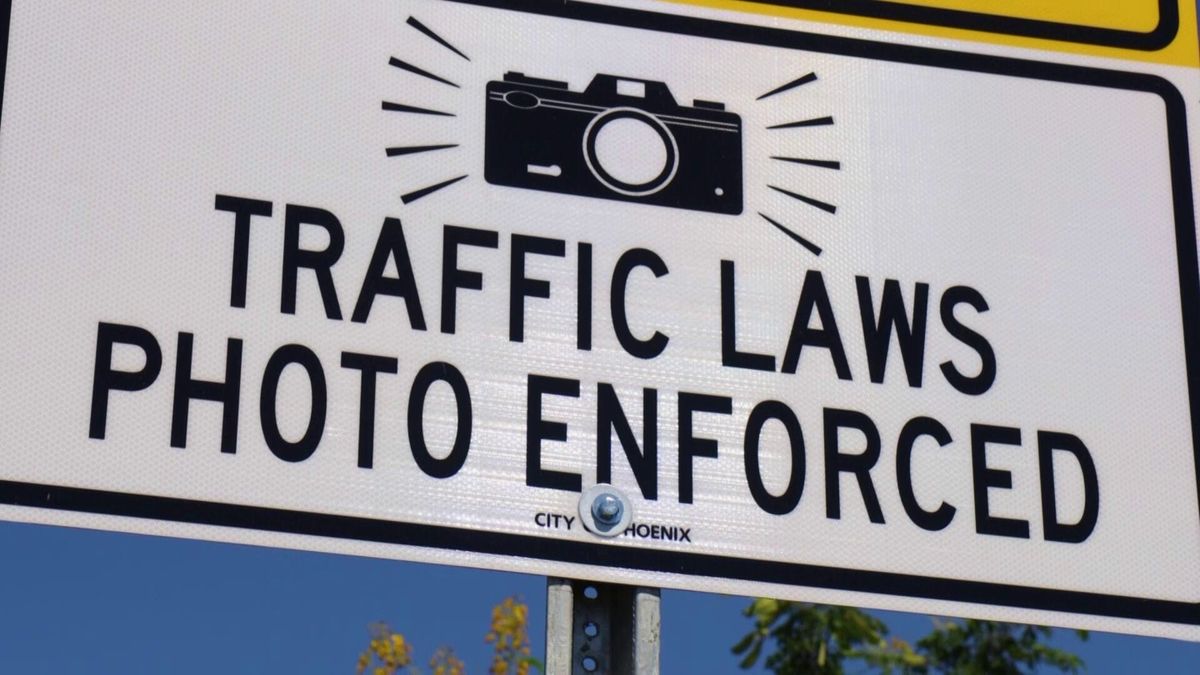
Perhaps no criticism of photo enforcement is more powerful than calling it a “money grab.” The phrase immediately changes the presumed purpose of a traffic camera: it is no longer there to slow dangerous drivers but to extract money from them.
That suspicion is widespread. In a national NHTSA survey, 70 percent of drivers agreed to some degree that speed cameras were used to generate revenue, compared with 55 percent who agreed that they were used to prevent crashes. The concern is particularly understandable when private companies operate enforcement equipment and receive public money in connection with citations.
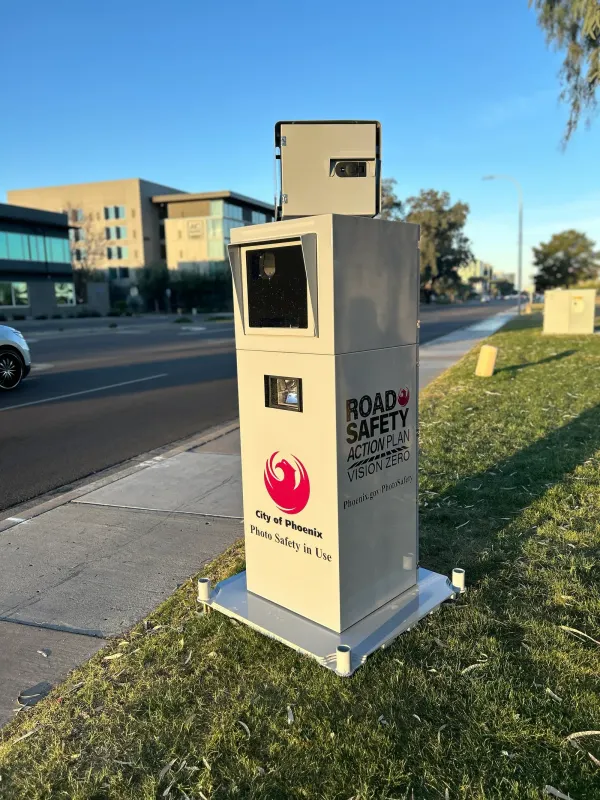
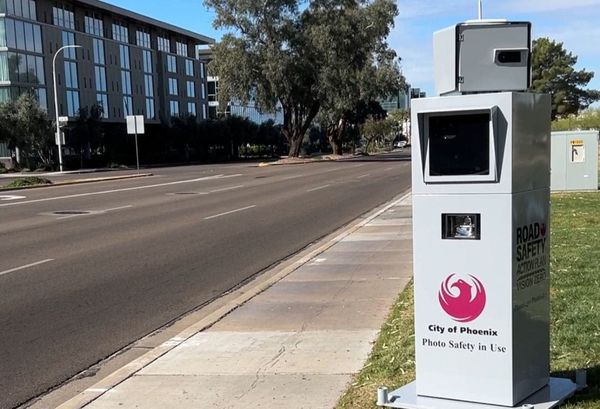
But Phoenix's own history complicates the idea that photo enforcement is primarily a municipal cash machine. In the final full year of Phoenix's previous program, fiscal year 2018-19, cameras produced approximately $1.3 million in gross citation revenue. After vendor payments and city staffing costs, however, Phoenix reported net revenue of approximately $57,000. Its five-year average was about $28,000 per year.
The current program is explicitly structured around cost recovery. Phoenix says citation revenue will offset program costs and that remaining funds will be reinvested in Vision Zero traffic-safety projects. That does not mean financial incentives should be ignored. Vendor contracts, payment structures, citation volumes, program costs, and use of surplus revenue should all be public and scrutinized. Phoenix itself has previously examined industry models ranging from flat subscriptions to per-citation fees and revenue sharing.
But there is a logical problem with treating revenue generation as an objection specifically to cameras.
Replacing a camera with a police officer does not abolish the traffic law, the fine, or the government's receipt of money. It changes who detects the violation.
If a driver traveling substantially over the speed limit receives a $300 citation from an automated system, critics may call it government profiteering. If the same driver receives the same citation after being stopped by an officer, that criticism often disappears—even among people whose politics otherwise emphasize government overreach.
That inconsistency becomes especially striking when combined with “Back the Blue” rhetoric. Arizona's 2026 photo-enforcement measure simultaneously declares that law enforcement should not exist to generate government revenue and argues that traffic enforcement should instead be placed in the hands of police officers.
A more principled debate would ask the same questions regardless of who issues the ticket. Is the law reasonably designed? Is enforcement aimed at genuinely dangerous behavior? Are penalties proportional? Are locations selected because of crash risk rather than citation potential? Are low-income residents disproportionately harmed? Does the enforcement strategy actually improve safety? And where does the money go?
Those are stronger questions than simply asking whether a camera is involved.
Calling every automated citation a “money grab” while treating officer-issued enforcement as inherently legitimate risks confusing opposition to government power with a preference for a particular form of government power. If revenue generation is the real concern, the principle should follow the money—not stop when the person collecting it is wearing a badge.Revenue Is a Byproduct of Deterrence, Not Evidence of a “Money Grab”
One of the most common arguments against automated traffic enforcement is that cameras are a “money grab” or “revenue generator.” The criticism has intuitive appeal: cameras issue citations, citations carry fines, and those fines produce money for government.
But that reasoning overlooks a basic fact about traffic enforcement—and about fines generally. The financial penalty is not incidental to the system. It is one of the mechanisms through which the law attempts to change behavior.
Society routinely attaches financial consequences to undesirable conduct because rules without meaningful consequences have limited deterrent value. Traffic fines are intended to make speeding, red-light running, illegal parking, and other violations costly enough that people have an incentive to avoid repeating them. NHTSA describes traffic penalties as part of the system used to deter speeding and aggressive driving and notes that deterrence is strongest when motorists believe there is a meaningful probability that violations will actually be detected and punished. Indeed, research reviewed by NHTSA suggests that the certainty of punishment may be more important than simply making punishments increasingly severe.
That is one reason automated enforcement can change behavior. A police officer can only observe a tiny fraction of the traffic passing through a dangerous corridor. A fixed camera creates a much higher perceived probability that speeding at that location will result in a consequence. NHTSA considers speed-safety cameras a proven safety countermeasure and reports that properly implemented programs can reduce roadway fatalities and injuries by approximately 20 to 37 percent.
The purpose of the citation is therefore not simply to collect money. It is to create a predictable consequence for behavior society has decided is dangerous.
And that means revenue is unavoidable.
If Phoenix operates an effective speed-enforcement program, some drivers will violate the law, some will receive citations, and some will pay fines. There is simply no realistic way to use monetary penalties as a deterrent while simultaneously insisting that the system generate no money. If enforcement eventually becomes so effective that almost nobody speeds and citation revenue collapses, that would be an excellent outcome. But during the process of changing behavior, revenue will necessarily be produced.
The more useful question is not whether revenue exists, but what determines the size of the penalty and what happens to the money afterward.
A traffic fine should not be calibrated around what violators would prefer to pay. Almost everyone receiving a citation would consider a smaller fine more “fair.” But a penalty so trivial that motorists simply absorb it as the cost of speeding has failed at its primary purpose.
At the same time, this does not justify arbitrarily punitive fines. Penalties should remain proportionate to the offense, consistent with law, and sensitive to the possibility that identical dollar amounts impose dramatically different burdens on households with different incomes. Research also cautions that endlessly increasing penalties does not necessarily produce proportionally greater compliance, particularly among habitual offenders.
The goal should therefore be effective deterrence, not maximum punishment and not minimum discomfort. The appropriate question is: What combination of enforcement certainty and financial consequence actually produces safer driving?
That distinction also complicates the political rhetoric surrounding Phoenix's Photo Safety Program.
The city says its cameras are intended to change driver behavior, not generate profit. Phoenix currently operates the program on a cost-recovery basis, with citation revenue paying program expenses and any remaining funds dedicated to its Vision Zero Road Safety Action Plan. That is a sensible safeguard against turning traffic enforcement into a general-purpose revenue source.
But there is no compelling reason that an effective safety program must mathematically produce exactly zero surplus in order to remain legitimate.
Suppose a camera costs $200,000 per year to operate but generates $300,000 in fines because substantial numbers of motorists continue driving dangerously. The existence of the additional $100,000 does not demonstrate that the camera was installed to make money. The relevant questions are whether the camera was placed because of documented safety concerns, whether the penalty was appropriately calibrated, whether speeding actually declined, and where that additional money went.
Reinvesting surplus revenue into road safety provides a reasonable middle ground. Money generated by unsafe driving can help fund safer street design, pedestrian improvements, protected bicycle infrastructure, traffic calming, school-zone improvements, lighting, signal upgrades, or other interventions that eventually reduce the need for enforcement itself. Phoenix's current policy of directing remaining Photo Safety funds toward Vision Zero follows exactly that principle.
This is also where the “money grab” argument creates an interesting tension with reflexive “Back the Blue” politics.
Replacing a camera with a police officer does not eliminate the fine. The same government still establishes the speed limit, prohibits the behavior, issues the citation, and receives the money. What changes is the method of detection.
If a $300 penalty is objectionable because government receives $300, it should remain objectionable when a police officer writes the ticket. Conversely, if the financial consequence is accepted as a legitimate deterrent when imposed by an officer, it is difficult to argue that the mere involvement of a camera transforms the same penalty into government profiteering.
That suggests the real debate should move beyond slogans about “revenue generation.”
The proper safeguards are straightforward: choose camera locations based on documented crash and speeding data; establish penalties based on evidence about deterrence and proportionality rather than their popularity among violators; publicly report citations, revenues, expenses, and safety outcomes; prohibit incentives that reward vendors for maximizing tickets; and dedicate surplus revenue to transportation safety rather than allowing enforcement to become a hidden source of general operating funds.
Under that framework, generating some revenue is not evidence that a traffic-safety program has failed ethically.
It is the predictable consequence of imposing financial penalties on people who continue engaging in behavior the program is designed to deter.